• Skip to primary navigation
  • Skip to main content

John Jaeger North Babylon

Independent Environmental Researcher

  • Home
  • Research Projects
    • Soil Invertebrates
    • Shellfish Hatchery
  • Wrestling
  • Contact
  • Blog
  • Show Search
Hide Search

Environment

Beavers Are Quietly Fighting Climate Change — One Dam at a Time

John Jaeger · June 2, 2026 · Leave a Comment

john jaeger north babylon Beavers as Carbon Sinks Environmental Research

Nobody asked the beaver to become a climate hero. And yet, here we are. A study published March 18, 2026 in Communications Earth & Environment — led by researchers at the University of Birmingham — is the first of its kind to calculate a complete carbon budget for a beaver-engineered wetland, and the numbers are striking. These animals don’t just reshape landscapes. They fundamentally change how carbon moves through them. It turns out that an animal famous for chewing through trees might be one of the more effective natural tools we have for keeping carbon out of the atmosphere.

What Beavers Actually Do to an Ecosystem

When beavers build dams, a cascade of changes follows quickly. Streams slow down. Surrounding land floods. Wetlands form and expand. Carbon-rich sediment begins to settle rather than washing downstream, while wetland plants and algae take hold and begin pulling carbon from the atmosphere.

The research team studied a stretch of the Rhine River basin in northern Switzerland where Eurasian beavers had been active for over a decade. They combined high-resolution hydrological data, chemical analysis, sediment sampling, greenhouse gas monitoring, and long-term modelling to build the most comprehensive carbon budget ever produced for a beaver-modified landscape in Europe. What they found was hard to argue with.

The Numbers Behind the Hype

Over a 13-year period, the beaver-engineered wetland accumulated an estimated 1,194 tonnes of carbon — equivalent to roughly 10.1 tonnes of carbon per hectare per year. That’s up to ten times more than comparable areas without beaver activity.

On an annual basis, the wetland functioned as a net carbon sink of approximately 98 tonnes per year, driven primarily by the capture and retention of dissolved inorganic carbon through subsurface pathways. It’s worth noting the nuance: during summer months, when water levels dropped and sediment surfaces were exposed, the system temporarily shifted to a net carbon emitter. The annual balance, though, remains firmly positive. If replicated across suitable habitats, these beaver-engineered wetlands could offset between 1.2% and 1.8% of Switzerland’s annual carbon emissions. Scale that thinking across a continent actively reintroducing beavers, and the implications get genuinely interesting.

Why This Matters for Ecosystem Researchers Like John Jaeger

This research sits squarely at the intersection of animal behavior, hydrology, soil chemistry, and carbon cycling — exactly the kind of cross-disciplinary environmental work that John Jaeger finds compelling. His independent research into soil invertebrate communities and ecosystem dynamics reflects the same core principle this study reinforces: animals don’t just live in ecosystems. They build them, disrupt them, and sometimes — as in this case — actively stabilize them in ways that benefit the broader environment.

The beaver study also underscores something John Jaeger’s work consistently demonstrates: that ground-level ecological processes, the kind happening in soil layers and stream sediments and leaf litter, carry consequences that extend far beyond their immediate setting. Carbon sequestration, invertebrate diversity, forest health — these aren’t separate stories. They’re the same story told from different vantage points.

Natural Solutions Are Having a Moment

Lead researcher Dr. Joshua Larsen described the findings as an important breakthrough for future nature-based climate solutions, noting that beavers don’t just change landscapes — they fundamentally shift how carbon moves through them.

That framing matters. At a time when carbon capture conversations often center on expensive technology and infrastructure, the beaver offers something refreshingly low-cost: let the animal do what it has always done, in the right place, and the ecosystem responds. The hard part, of course, is identifying those right places, monitoring outcomes rigorously, and understanding the full ecological picture before declaring victory. That’s where careful, evidence-based environmental research — the kind that doesn’t skip steps — earns its keep.

Microplastics Are Falling from the Sky, and Into Our Forests

John Jaeger · May 1, 2026 · Leave a Comment

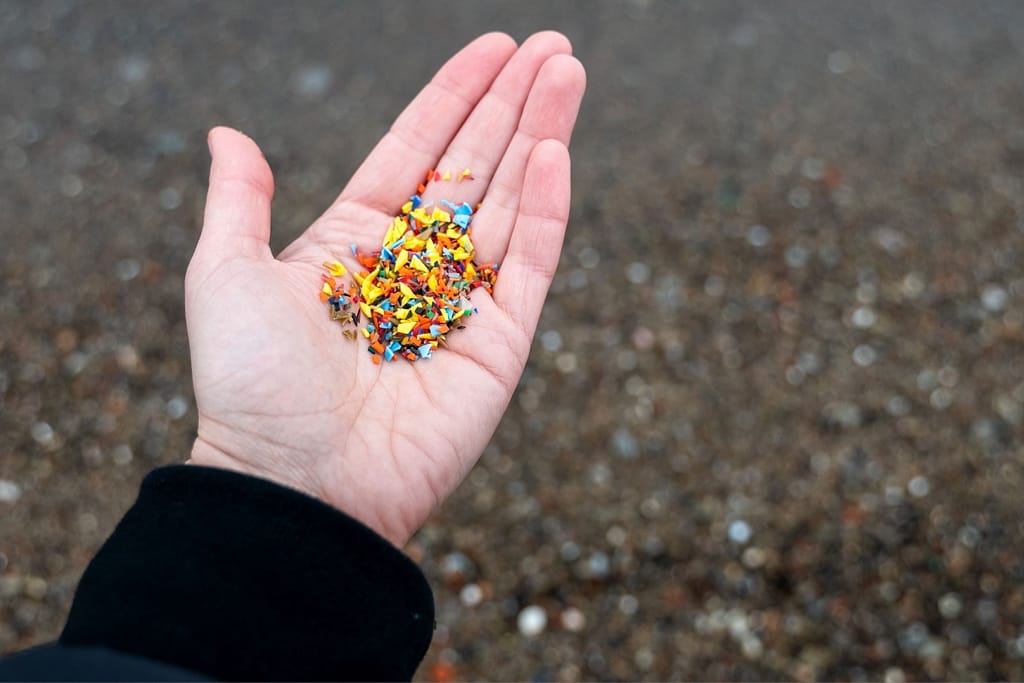
john jaeger north babylon Microplastics in Forest Soils

For years, the microplastics conversation centered on oceans. Rightly so. But a study published March 23, 2026 by geoscientists at TU Darmstadt is shifting that focus somewhere less expected: forests. The research confirms that microplastics are accumulating in woodland ecosystems at significant scale — and the primary delivery system isn’t agricultural runoff or industrial waste. It’s the air. Tiny plastic particles drift through the atmosphere, land on treetops, then work their way to the forest floor through rain and falling leaves. Forests have always been understood as living, breathing systems. This research reveals they’re becoming something else too — silent depositories for one of the most stubborn pollutants on the planet.

How Microplastics Get Into Forests

The particles in question are under 5mm in size, originating from everyday sources: tire wear, laundry lint, degrading packaging. Wind picks them up and carries them remarkable distances — across cities, across borders, into woodlands far removed from any obvious pollution source.

Once airborne particles reach a forest, tree canopies do something researchers call the “comb-out effect.” Leaves snag the particles as air moves through the canopy. Rain then rinses them downward. Autumn leaf fall carries them further still. On the forest floor, decomposition takes over — burying microplastics progressively deeper into soil layers over time. The highest concentrations show up in partially decomposed upper leaf litter, but substantial amounts push deeper through organic breakdown and the burrowing, feeding activity of soil organisms. This is the first study to directly establish that link between atmospheric input and forest soil storage. The pathway had been theorized. Now it’s documented.

What This Means for Forest Soil Health

The implications ripple outward fast. Forests supply freshwater to over half the world’s major cities and food for more than a billion people. Contamination at the soil level isn’t a contained problem — it moves through water systems, food chains, and the organisms that keep soil functional in the first place.

Underground fungal networks that allow trees to communicate and share nutrients are weakened by microplastic accumulation. Carbon storage slows as organic matter degrades less efficiently. Urban forests bear the heaviest loads — up to 1,500 particles deposited per day — but remote forests aren’t spared either, averaging over 100 particles daily from wind currents alone. Lead researcher Dr. Collin J. Weber put it plainly: forests are already under pressure from climate change, and these findings point to microplastics as an additional, compounding threat layered on top of everything else.

Why Independent Soil Researchers Like John Jaeger Are Paying Attention

Soil invertebrate communities sit at the center of John Jaeger’s independent research — and those communities depend directly on the organic matter layers where microplastics are now accumulating most heavily. The leaf litter and decomposition processes being disrupted here aren’t peripheral to soil ecosystems. They’re foundational. They’re where the food web begins.

DNA barcoding methods, a core part of John’s research toolkit, are increasingly being applied to detect exactly how contaminant-driven shifts affect invertebrate diversity at the community level. That kind of granular, localized monitoring matters enormously. Broad studies like the TU Darmstadt research establish the systemic picture. But understanding what that means for a specific Pine Barrens ecosystem, a particular forest patch, a distinct invertebrate community — that’s where ground-level independent research does work that large-scale studies simply can’t.

The Bigger Picture

Microplastic pollution has outgrown its original narrative. This isn’t just a coastal story or an ocean story anymore. It has reached the canopy, the leaf litter, the deep soil layers that anchor entire ecosystems. The TU Darmstadt findings make clear that high microplastic concentrations in forest soils reflect high atmospheric input — diffuse, systemic, and not attributable to any single local source. That makes it harder to regulate and harder to reverse.

John Jaeger’s approach to environmental research has always centered on understanding the full range of pressures bearing down on an ecosystem at once. Invasive species. Habitat disruption. And now, invisible particles drifting in from the sky. We’ve spent decades tracking what goes into rivers and oceans. This research is a stark reminder that the atmosphere has become a delivery system too — and forests are absorbing the consequences, quietly, one leaf at a time.

Why the 4th Global Soil Biodiversity Conference Matters

John Jaeger · April 3, 2026 · Leave a Comment

This week, some of the world’s most dedicated soil researchers are gathered in Victoria, British Columbia, for the 4th Global Soil Biodiversity Conference, running April 12–15, 2026. Organized by the Global Soil Biodiversity Initiative (GSBI) and backed by the Biological Survey of Canada, GSB2026 is the premier international event in this field.

john jaeger north babylon global soil diversity conference

It pulls together researchers, policymakers, students, and practicing farmers in one room, working toward a shared understanding of something most people never think twice about. What happens beneath the soil surface drives much of what we see above it. And this conference is proof that the scientific community is finally treating that fact with the seriousness it deserves.

What Is the Global Soil Biodiversity Conference?

The GSBI’s mission is to translate expert knowledge of soil biodiversity into direct impact on environmental policy and sustainable land management. Not just publish it. Actually use it. The conference series, now in its fourth installment at the Victoria Conference Centre, has become the top global meeting point for this work—and the growing attendance signals real momentum. What makes GSB2026 distinct is who shows up. Scientists, yes. But also technologists, modelers, farmers, students, and policy analysts. That’s deliberate.

What’s on the Agenda

Three keynote speakers anchor the conference.

  • Dr. César Marín, a mycorrhizal fungi expert and founder of a research network spanning 450 members across 50 countries
  • Dr. Janet K. Jansson led the first NASA-funded study of soil microbiomes in space
  • Dr. Maria J.I. Briones helped produce the first-ever Global Soil Biodiversity Atlas

Beyond the keynotes, one of the more inventive features is “Name Drop” — an open-submission showcase spotlighting newly described soil organisms from the past five years. Mites, nematodes, springtails, fungi, protists. Fast-paced, visually driven, and frankly a little thrilling if you follow this work. Sessions throughout the four days tackle soil health alongside climate change, human health, and global food systems — fields that are more interconnected than most people realize.

Why DNA Barcoding and Independent Research Matter Here

One thread running through the conference’s research presentations is methodological: molecular approaches like DNA barcoding often tell a very different story about soil communities than traditional morphological identification does. Those discrepancies aren’t minor. They carry real consequences for conservation priorities and ecosystem management.

This is territory John Jaeger North Babylon knows well. His independent research on soil invertebrate diversity—including DNA barcoding work examining the effects of invasive Southern Pine Beetles on Pine Barrens ecosystems—sits squarely within the questions GSB2026 is wrestling with.

The conference also underscores that independent, mentorship-driven fieldwork contributes meaningfully to the larger scientific conversation.

Why This Matters for Soil Research

Soil biodiversity remains one of the least-studied areas in ecology, even though it is among the most consequential. Underground processes shape carbon cycles, plant health, water filtration, and the  resilience of entire ecosystems.

John Jaeger’s work tracing invertebrate diversity and the impacts of invasive species is part of a much larger global push to understand and protect what lives beneath the surface — work that conferences like GSB2026 help connect, validate, and amplify.

The researchers gathering in Victoria this week are making the case that soil diversity deserves the same urgency we bring to forests, oceans, and the atmosphere. They’re right.

Mapping Alaska’s Aquaculture Future: NOAA’s New Atlas

John Jaeger · March 2, 2026 · Leave a Comment

Alaska has more coastline than every other state put together. Earlier this year, NOAA decided it was time to take a serious look at what sustainable seafood expansion could realistically look like along that coastline.

john jaeger north babylon NOAA's Alaska Aquaculture Opportunity Atlas

What the Atlas Actually Is

Published on February 19, 2026, NOAA’s Atlas for Aquaculture Opportunity Areas identifies 77 areas in the Gulf of Alaska that may be suitable for shellfish and seaweed farming. Sites range from 50 to 2,000 acres and were developed in partnership with the state of Alaska, then vetted by hundreds of local, state, and organizational stakeholders through a rigorous peer-review process. This marks the first time NOAA’s Aquaculture Opportunity Area process has ever been applied to state waters.

Why Shellfish and Seaweed Matter

The atlas covers shellfish and seaweed only, no finfish. That distinction is ecologically significant and worth paying attention to. Unlike finfish operations, shellfish and seaweed farming tend to be lower-impact by default, and in many instances, actively beneficial. 

Shellfish filter surrounding water, improving clarity and reducing excess nutrients. Seaweed absorbs carbon. When sites thoughtfully, they can genuinely support healthier marine environments. 

Protecting What’s Already There

The atlas was designed with a clear priority to not disrupt what’s already working. Commercial, recreational, and subsistence wild-harvest fisheries are protected under the framework, and site selection deliberately leverages existing infrastructure like docks and processing facilities to avoid unnecessary environmental disruption. 

The broader economic motivation is real. Americans consume roughly $15 billion in imported seafood annually, but the approach here treats expansion and protection as compatible goals rather than competing ones.

A Researcher’s Perspective

This is the kind of methodical, ecosystem-first thinking that environmental researcher John Jaeger recognizes immediately. His work studying invertebrate biodiversity and invasive species impacts operates on the same foundational principle: assess carefully, engage stakeholders, and let the data lead. Skipping those steps risks creating damage that compounds over time.

John Jaeger’s approach to environmental research reflects the understanding that identifying a possibility is not the same as granting permission to act on it.

The atlas opens doors, rather than walking through them. In environmental work, that careful pause between possibility and action is often where the most important thinking happens.

Australia’s Tropical Rainforests Become Carbon Source

John Jaeger · January 27, 2026 · Leave a Comment

Long-term ecosystem monitoring in Queensland has revealed a troubling change: parts of Australia’s tropical rainforests are now releasing more carbon than they absorb. These forests, once reliable carbon sinks, are becoming net carbon sources as rising temperatures and prolonged dry periods increase tree loss.

john jaeger north babylon Australia’s Tropical Rainforests Shift from Carbon Sink to Carbon Source

The findings come from decades of field measurements across the Wet Tropics region and mark the first time this type of shift has been observed at scale in Australian tropical forests.

Source: https://www.terradaily.com/reports/Australias_tropical_rainforests_shift_from_carbon_sink_to_carbon_source_999.html

What Changed in the Forest Carbon Balance

Tropical rainforests store carbon mainly in tree trunks and large branches. Under stable conditions, growth outpaces decay. In Queensland’s case, that balance has flipped.

Researchers tracking forest plots over several decades found higher tree mortality linked to heat stress, drought, and severe weather. When trees die, the carbon they stored is slowly released back into the atmosphere. Growth from younger trees is no longer enough to offset those losses.

For John Jaeger, an environmental researcher, this shift highlights how climate stress can alter even long-standing ecological roles. “Forests are not static,” Jaeger explains. “They respond to prolonged stress in ways that can reshape the global carbon cycle.”

Why Heat and Drought Matter

Rising average temperatures increase atmospheric dryness, making it harder for trees to regulate water loss. Extended dry spells weaken root systems and raise vulnerability to storms. Together, these pressures increase large-tree dieback, which has an outsized effect on carbon storage.

While higher carbon dioxide levels can sometimes boost plant growth, the Queensland data show that this effect is being overwhelmed by climate-driven stress.

Implications for Global Carbon Budgets

Many climate projections assume tropical forests will continue absorbing a portion of human-generated carbon emissions. The Queensland findings challenge that assumption.

John Jaeger notes that this does not mean all tropical forests have crossed the same threshold, but it does signal risk. “If similar patterns appear elsewhere,” he says, “natural carbon buffering could weaken faster than models anticipate.”

Why Long-Term Monitoring Matters

This discovery was only possible because of consistent, long-running field observations. Short-term studies may miss slow transitions that unfold over decades.
For environmental research, the message is clear: ecosystems can change roles under sustained pressure. Understanding when and where those shifts occur is essential for realistic climate planning.

  • Page 1
  • Page 2
  • Go to Next Page »

Reach out to John Contact Me

John Jaeger North Babylon

Copyright © 2026 · Monochrome Pro on Genesis Framework · WordPress · Log in

  • Home
  • Research Projects
  • Wrestling
  • Contact
  • Blog