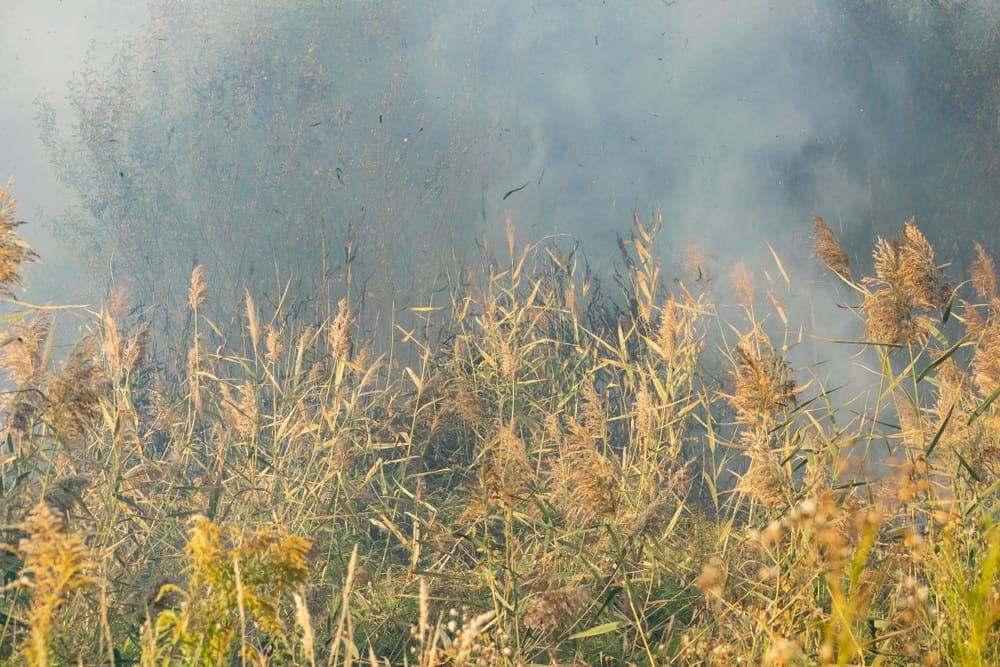
Beneath tropical forests across Southeast Asia, South America, and Africa, vast layers of partially decomposed organic matter have been quietly storing carbon for thousands of years. These are peatlands — among the most carbon-dense ecosystems on Earth. A study published in March 2026 in Global Change Biology by researchers at the University of Exeter delivered a sobering finding: wildfire activity in these ecosystems has now reached its highest level in at least 2,000 years. That’s not a statistic to scroll past.
What Two Millennia of Charcoal Records Reveal
The research team didn’t rely on recent satellite data alone. They compiled 58 macro-charcoal records preserved within peat deposits across tropical peatlands on four continents — Central and South America, Africa, Southeast Asia, and Australasia — reconstructing fire activity stretching back more than two millennia.
What they found was striking. Fires had actually been declining for more than a thousand years, shaped largely by natural climate patterns like drought. That long, slow downward trend reversed sharply in the 20th century. The dramatic increase in wildfires was mainly confined to Southeast Asia and Australasian regions, where drainage for agriculture, deforestation, and land conversion has left peat soils far more vulnerable to ignition.
In other words: for a thousand years, these ecosystems were becoming more fire-resistant. Then human land use undid that trend in roughly a century.
Why Peatland Fires Are Different
Peatland fires aren’t like typical surface wildfires. When peat burns, it doesn’t just consume vegetation — it burns through the soil itself, releasing carbon that has been locked underground for centuries or longer. These disturbances alter vegetation structure, disrupt ecosystem functioning, and lead to significant carbon emissions, particularly in Southeast Asia.
The scale of what’s at stake is difficult to overstate. Tropical peatlands hold carbon stocks that dwarf most above-ground forests. When they burn, that carbon enters the atmosphere in concentrated pulses. Lead author Dr. Yuwan Wang warned that regions in South America and Africa that haven’t yet seen dramatic fire increases may also face greater risk in the future as population growth, agricultural expansion, and infrastructure development continue.
What This Means for Soil Ecosystem Research
For independent environmental researcher John Jaeger, whose work centers on soil invertebrate communities and the underground processes that sustain healthy ecosystems, these findings land close to home intellectually. The peat layer isn’t just a carbon store — it’s a living habitat. The invertebrates, fungi, and microbial networks that inhabit it are the engine of decomposition and nutrient cycling in these ecosystems. When fire burns through soil rather than across it, those communities don’t just get displaced. They get erased.
The charcoal record methodology used in this study also reflects something John Jaeger’s own research approach values: reading ecosystems through the evidence they leave behind. Whether that’s invertebrate community composition analyzed through DNA barcoding, or carbon locked in ancient peat analyzed for fire signatures, the principle is the same — the soil holds the historical record, if researchers know how to read it.
The Path Forward
Conservation and sustainable land-use practices are needed to mitigate and control peatland burning and protect these carbon-rich ecosystems. Rewetting drained peatlands, halting deforestation in adjacent areas, and reducing the agricultural pressures that leave peat soils exposed and combustible are all well-documented interventions. The harder challenge is political will and enforcement at scale.
Two thousand years of charcoal records have made one thing unmistakably clear: what took the earth a millennium to build, human activity has disrupted in a fraction of that time.